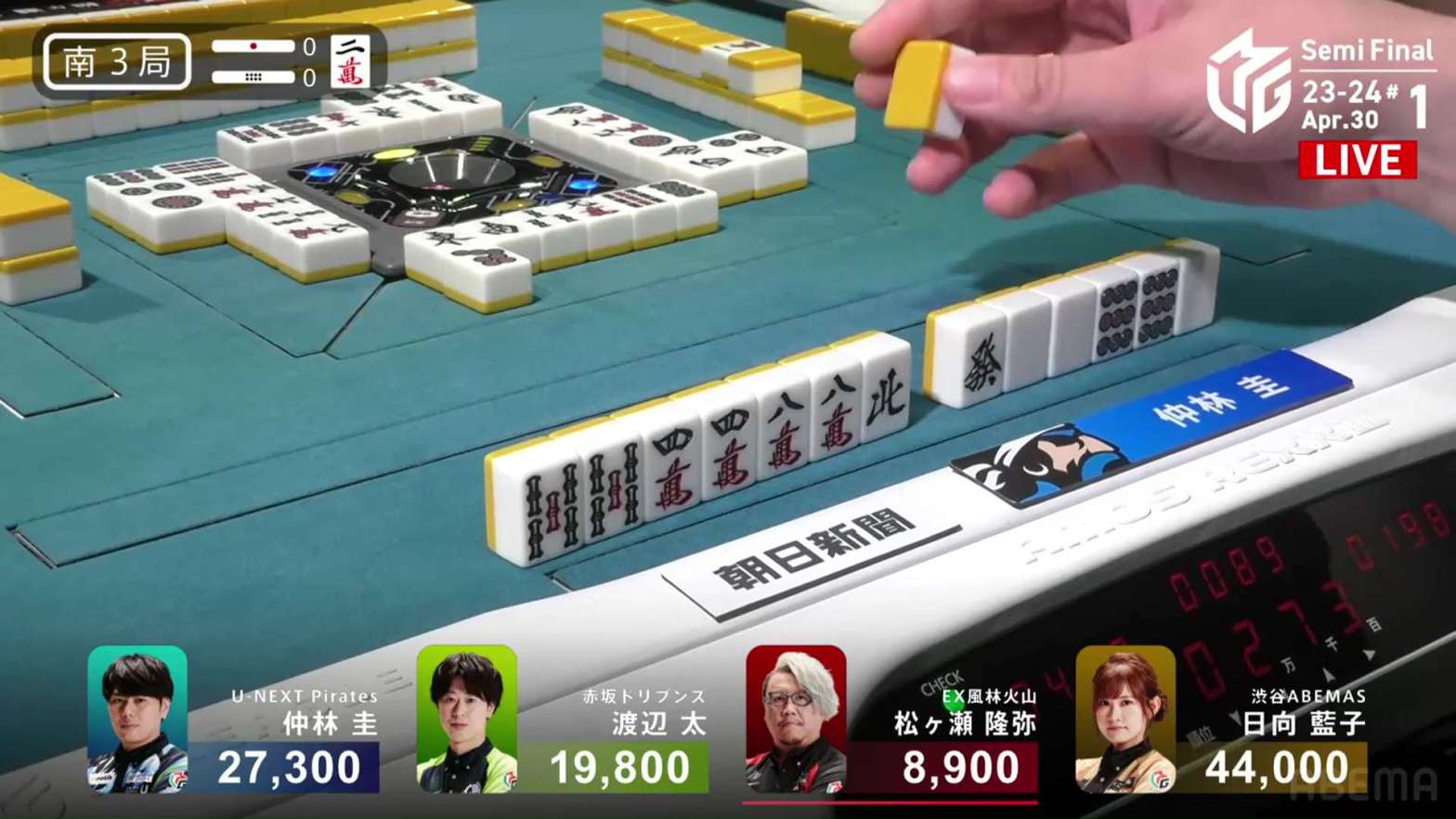
On April 30, 2024, an incident regarding a riichi and a referee ruling created a lot of discussion in the mahjong community. Today, I will be going through all the details, giving some insight on what transpired and some of the history involved in this incident.
Background
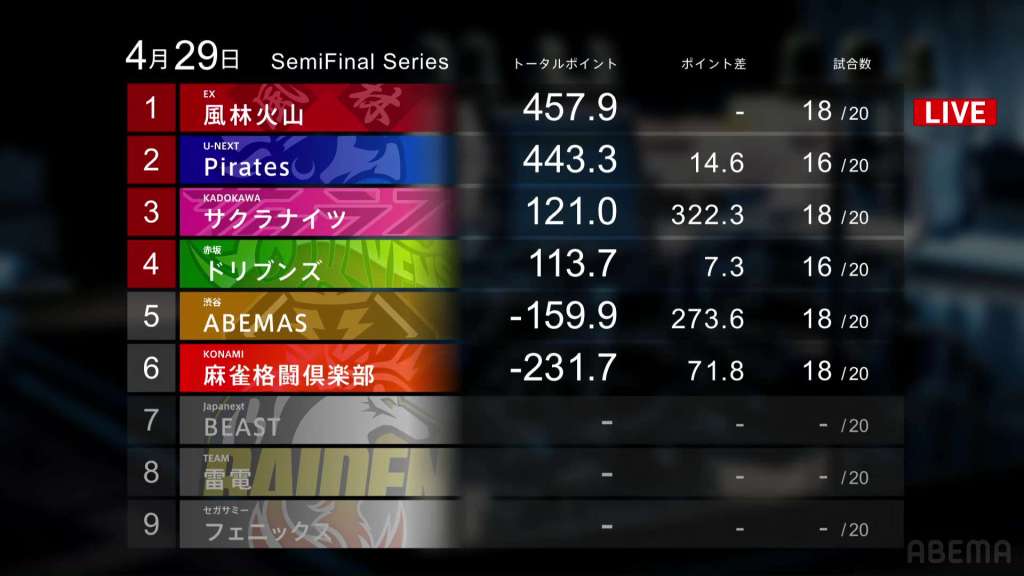
On April 30, 2024, during Game 27/30 of the semifinals, Nakabayashi Kei (仲林圭) is playing for the U-Next Pirates. The U-Next Pirates were sitting in 2nd place in the overall standings, 14.6pts behind the 1st place EX Furinkazan.
The EX Furinkazan is playing their final two games today, while the U-Next Pirates have these games plus two more games on Thursday. Also playing today is the 4th place Akasaka Drivens (playing today and Thursday) and the 5th place Shibuya Abemas (playing their final two games today).
Only the top 4 team will advance to the finals.
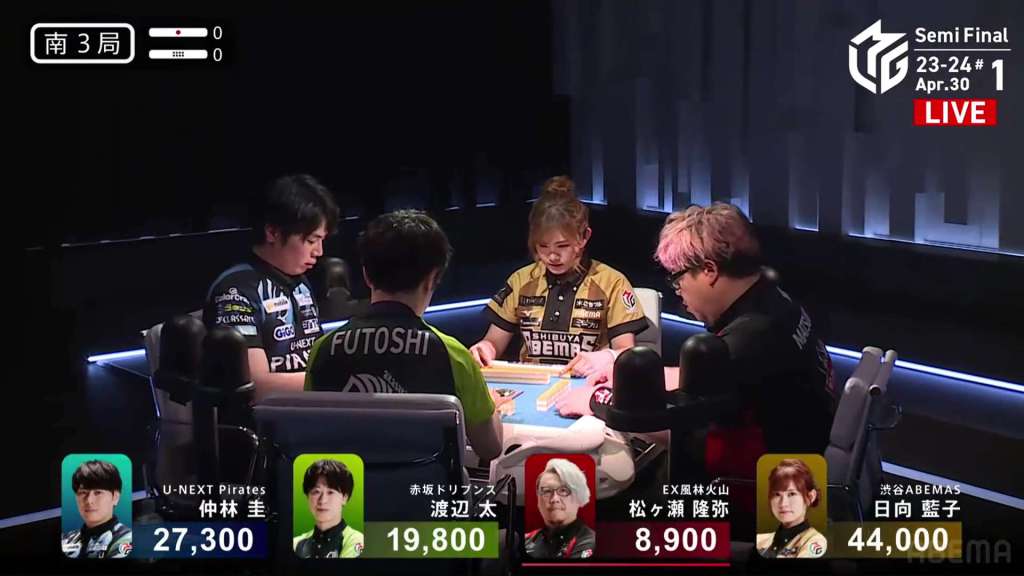
In S3-0, the scores are as follows:
- Nakabayashi Kei (仲林圭) (U-NEXT Pirates): 27,300
- Watanabe Futoshi (渡辺太) (Akasaka Drivens): 19,800
- Matsugase Takaya (松ヶ瀬隆弥) (EX Furinkazan) (Dealer): 8,900
- Hinata Aiko (日向藍子) (Shibuya Abemas): 44,000
Refereeing the game is Kajimoto Takunori (梶本琢程), longtime member and commentator in the mahjong community who has refereed many M-League games in the past.
The Incident
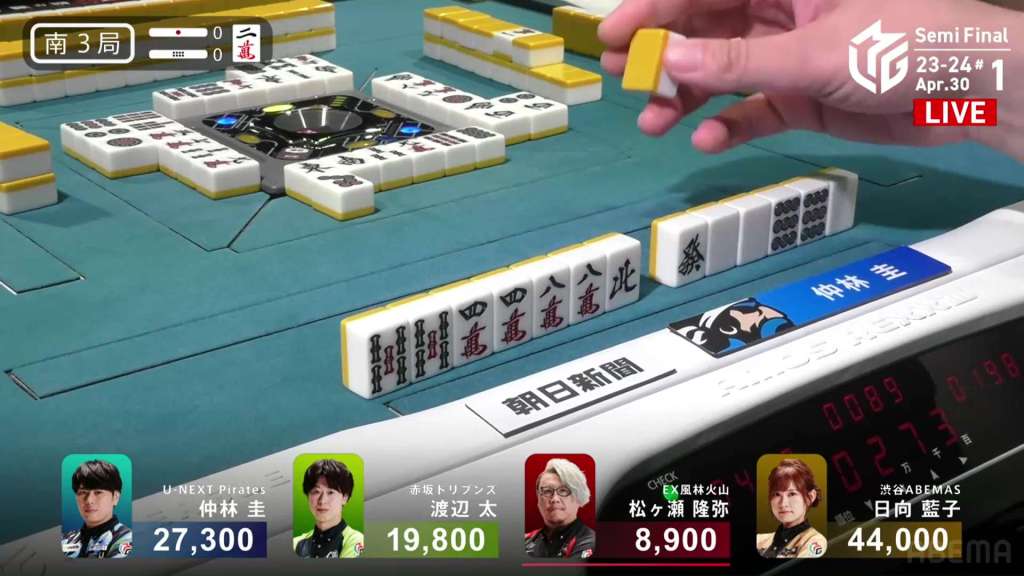
Video: https://abema.tv/video/episode/444-1_s60_p2970
In the second row, Nakabayashi drew a white dragon and vocalized a “riichi” call, thinking he was tenpai for seven pairs. However, before he discards, he stops himself and realizes his mistake.
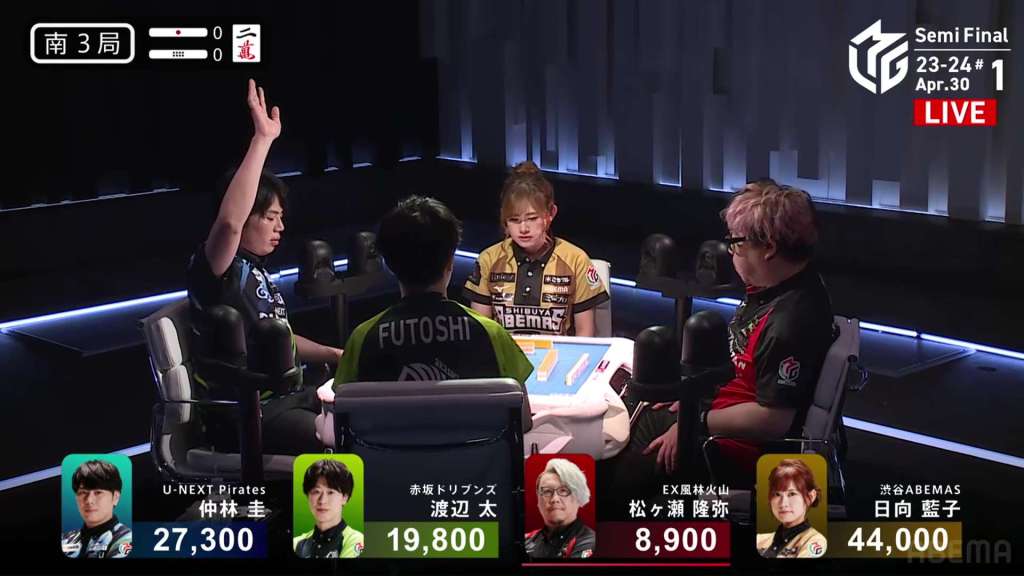
At this point, he calls the referee.
Immediate Ruling
「リーチ発声がありましたが、ノーテンリーチに気づき途中で止めたため、このままあがり放棄で続行いたします」
At the moment, a ruling was made that since Nakabayashi called the riichi but stopped himself before declaring the noten riichi (i.e. did not discard yet), he will be given a dead hand (アガリ放棄, agari houki).
When a player has a dead hand, they are not allowed to make any calls. If the hand goes to a draw, they will be forced to declare themself noten.
Note that in cases where you are already in riichi and your hand is declared dead after, you will not receive a noten riichi penalty if it goes to a draw (unless you are actually noten). You will have to reveal your hand at the exhaustive draw to prove that you are in fact tenpai.
Immediate Effects
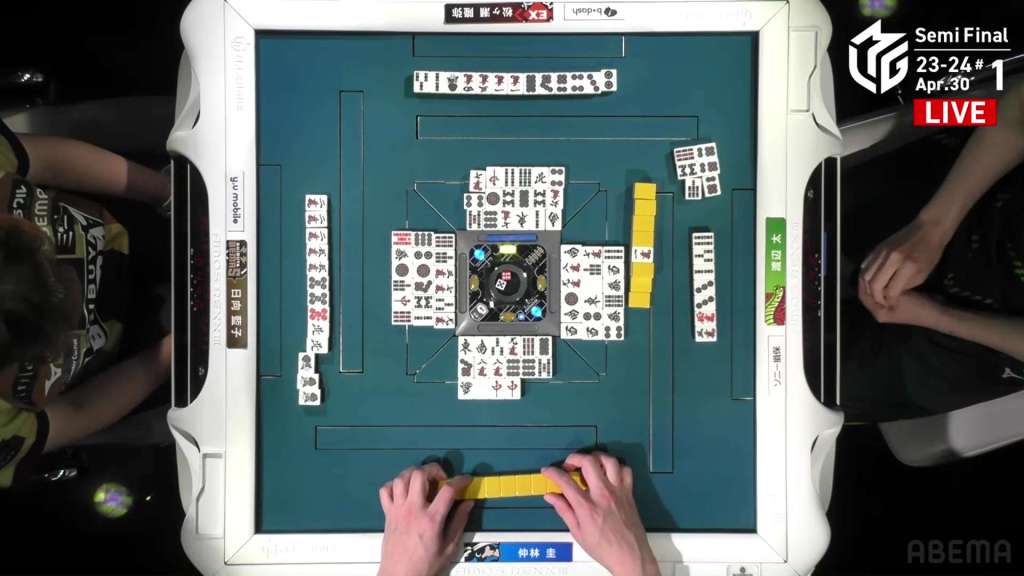
With Nakabayashi’s hand being declared dead, he is not allowed to make any calls or declare himself tenpai at an exhaustive draw. Near the end of the second row, Matsugase gets to tenpai and calls riichi. The hand ends up going to a draw with everybody but Nakabayashi being tenpai.
What is a Riichi?
A riichi call is a declaration made with a closed hand that you are one tile away from winning. When a riichi is declared, there are three actions:
- ① The call “riichi” is said out loud/vocalized
- ② You discard a tile, placing it sideways in your discard pool
- If your discard is claimed for a win, then the riichi is incomplete
- ③ A 1000-point stick is placed in the middle, just above your first row of discards
From this point on, any tile that is not used for a win or a concealed quad must be discarded. If you are furiten at any point during the riichi, then you will remain in furiten for the rest of the hand.
By calling riichi, you gain access to the 1-han yaku “riichi”, as well as access to the uradora.
① The Vocalization
The riichi process must be initiated with the player saying “riichi”.
Since it must start with a call, a player cannot discard and then later decided to make it a riichi.
② The Discard
The tile is discarded sideways to indicate at what point in hand the riichi was declared. If a player’s discard is claimed for a win, then the riichi is interrupted an no further action is required. If the player’s discard is called for any other purpose, then the next discarded tile will be turned sideways.
Sometimes a tile may turn sideways as you are discarding (due to the friction of the table, for example) and you are not intending to riichi. In these cases, the tile is simply adjusted and no penalty is given.
③ The Stick
The 1000 point stick is placed on the table and is up for grabs for the next winner. If the hand goes to a draw, then the stick is set aside and carried over to the next round.
Typically, if a player forgets to do ③, the players on the table will remind them. If they call riichi and discard sideways, but forget to put the stick in the middle, they will be reminded to do so.
What Is a Noten Riichi?
A noten riichi is a completed riichi declaration that is not tenpai.
A noten riichi is only penalized when the hand goes to an exhaustive draw. If it does go to an exhaustive draw and the hand is found to be noten, then the player will receive a chombo penalty (-20pts after oka/uma in M-League rules). Riichi sticks are returned to the players who declared it and the current hand is replayed (with the same number of honba)
Precedents
There have not been any instances of a cancelled riichi in M-League history. However, there are similar incidents that we can look at.
Completed Noten Riichi
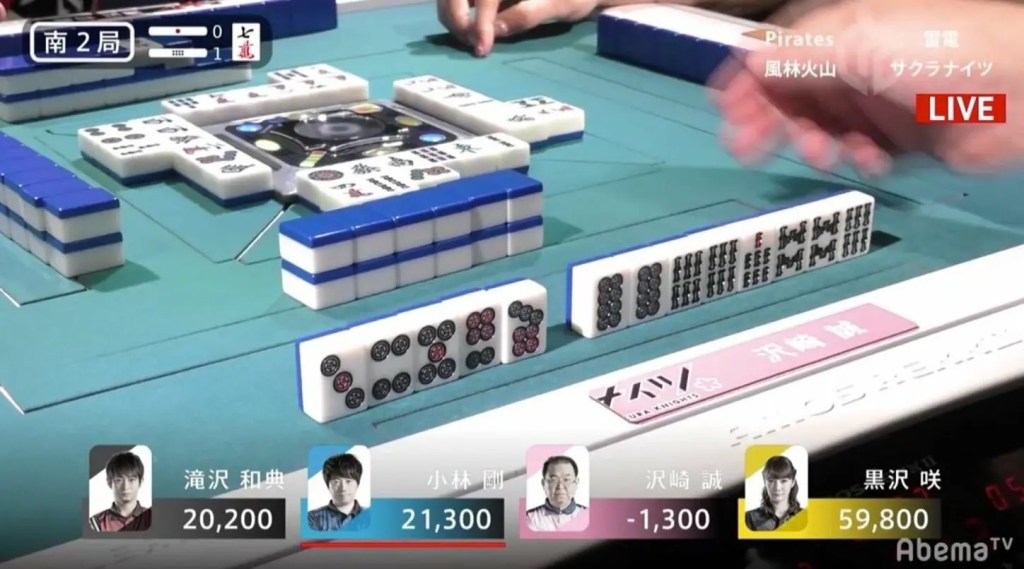
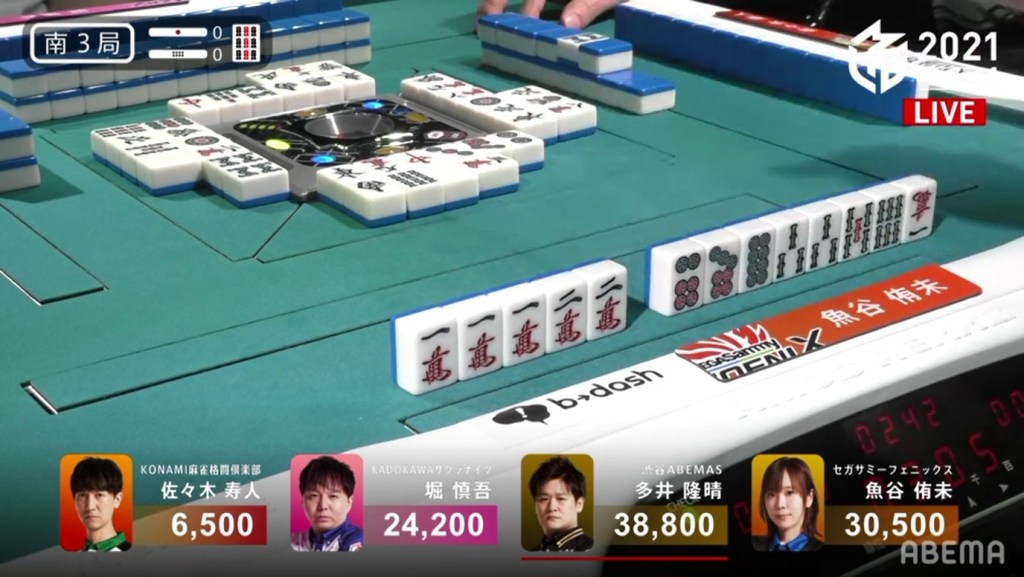
There have been two instances of a noten riichi in M-League history:
- Sawazaki Makoto (沢崎誠) of the Kadokawa Sakura Knights on February 7, 2020
- Uotani Yuumi (魚谷侑未) of the Sega Sammy Phoenix on January 3, 2022
In both instances, the player called riichi and discarded the wrong tile. Both players revealed at an exhaustive draw that they were noten and they both received chombo penalties.
Note that in any case of a noten riichi, a player will only receive a chombo penalty if the hand goes to an exhaustive draw. If another player wins, then the player is not penalized.
Kobayashi Almost Noten Riichi
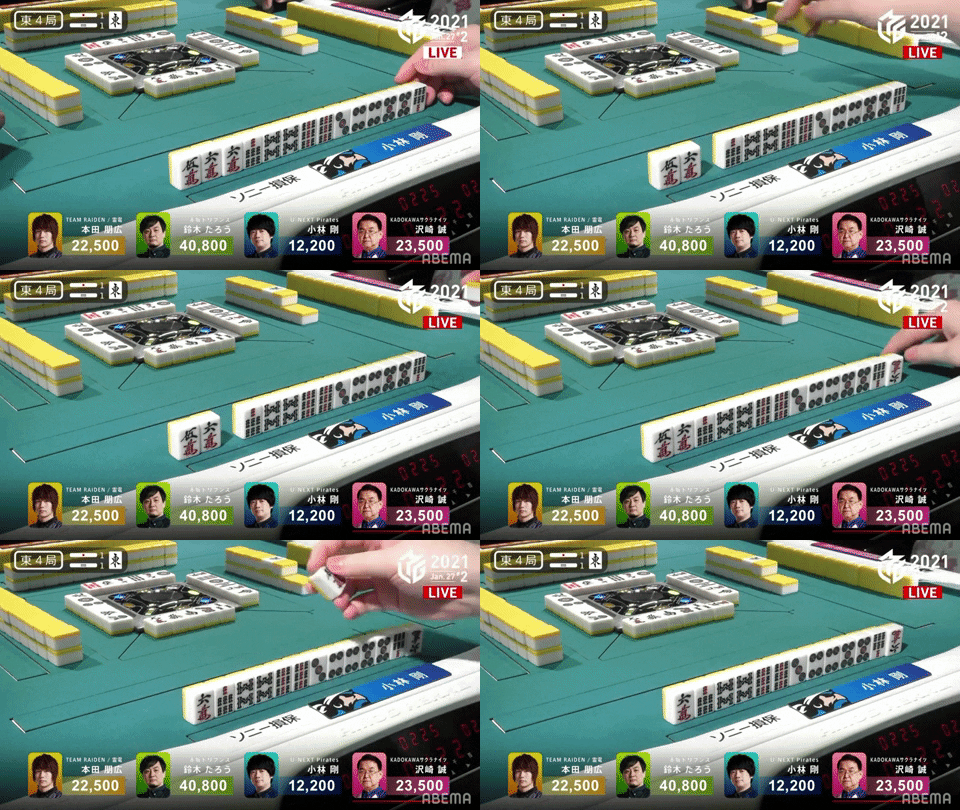
Video: https://abema.tv/video/episode/444-12_s30_p654
M-League Watch: https://mleaguewatch.wordpress.com/2022/01/29/m-league-2021-week-16-crisis-averted/2/#ryanpeikou
On January 27, 2022, Kobayashi Go (小林剛) of the U-NEXT Pirates vocalized a riichi call. Just as he was about to place the riichi tile in the discard pile, he stopped himself and realized it was the wrong one. He was able take the tile back (since he didn’t discard yet) and replace it with the correct one. Since he was able to correct and complete the riichi in time, no penalty was given.
237 Chii
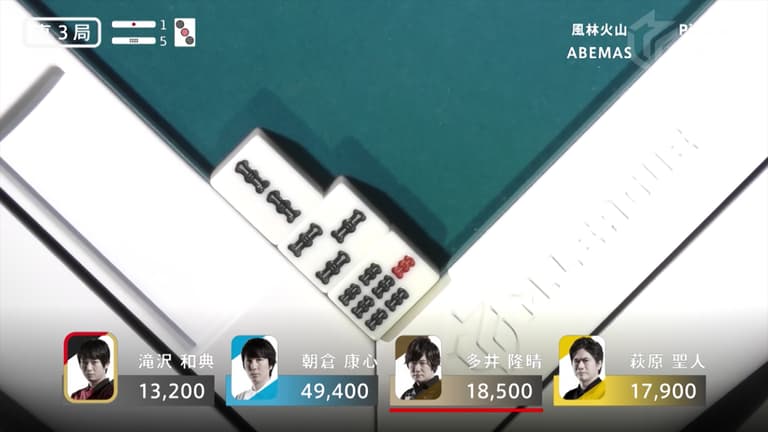
Video (ABEMA TV): https://abema.tv/video/episode/444-1_s6_p330
Video (YouTube): https://www.youtube.com/watch?v=qmW2kiR7Hxw
On February 5, 2019, Asakura Koushin (朝倉康心) of the U-NEXT Pirates called a chii and intended to reveal a 34s in his hand to claim the 2s. However, he instead revealed the 37s. Because he had made the declaration and revealed the tiles he was going to chii with, he was forced to create a 237s chii. Because the sequence is invalid, his hand has declared a dead hand.
Riichi + Unrevealed False Tsumo
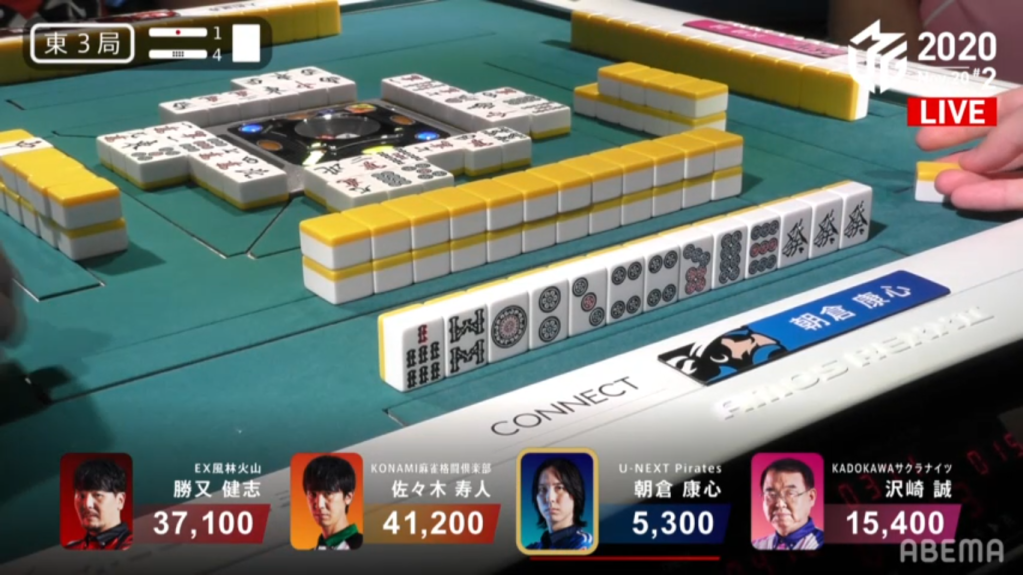
M-League Watch: https://mleaguewatch.wordpress.com/2020/11/21/m-league-2020-week-7-big-things-are-in-store/2/#asakura-dead-hand
On November 20, 2020, Asakura Koushin (朝倉康心) of the U-NEXT Pirates (who was cosplaying as Toki from Hokuto no Ken [Fist of the North Star]) declared riichi and waited on a 69s ryanmen. When he drew the 6p, he called tsumo. However, he realized his mistake, stopped himself from revealing any tiles and called a ref.
Because he made a false win declaration but did not reveal his tiles, the was given a dead hand. The hand ended up going to a draw. Since he declared riichi, he had to reveal that his initial riichi was indeed valid, which it was. He is considered noten due to having a dead hand, but he does not receive a noten riichi penalty since it was forced by the dead hand.
The Rulebook
Despite the discussion above, the M-League rulebook (in section 4.8.7) is actually very clear about the situation.
リーチの発声以後の取り消しはできない。
A riichi cannot be cancelled after it has been vocalized
By extension, a player who calls riichi but is not actually tenpai (such as in the case with Nakabayashi) will be forced to complete the riichi action with a noten hand. If the hand goes to a draw, then the player will receive a chombo.
Other Organizations
Other organizations treat a “cancelled” riichi declaration differently.
World Riichi Championship (WRC)
Under World Riichi Championship (WRC) rules, it is made clear in 12.3.2 (Errors related to calls and declarations) that if a player makes an empty riichi call, they will receive a dead hand.
An empty call is the action of making a call or a declaration then cancelling it, either because the player changed their mind or is unable to make the called action. Players are not allowed to change their calls, even with a quick correction. They must complete the first call, or will be penalized for an empty call.
Empty calls for groups, as well as empty concealed quad and riichi declarations, are not permitted and result in a dead hand.
WRC also provides more relaxed penalties under Mod.6.3 (Lower penalties) in its optional rules document:
- Under optional lower penalties, only a warning is given for an empty riichi call.
- Under optional bare minimum penalties, there is no penalty given for an empty riichi call.
European Mahjong Association (EMA)
Under the European Mahjong Association (EMA) rules in 5.3 (Errors in connection with riichi declaration), they state the following
- Failure to do ③ is reminded to do so, but the riichi is valid.
- Failure to do ① or ② has “not made a valid riichi declaration. The riichi bet is returned and the player has a dead hand“
There is no listed ruling for only doing ①. However, one may make the assumption that they failed to do ② and therefore has a dead hand.
Mahjong Union (Mu/μ)
As noted by Kobayashi Go (小林剛), a professional from Mu and a member of the U-Next Pirates, his professional organization’s rulebook states (under rule #39) that a riichi can be cancelled if they have not discarded, and a cancelled riichi is given a dead hand. In the Tweet, he also said that he hopes that the M-League rules is changed to follow a similar ruling.
Saikouisen
Under Saikouisen rules, a riichi cannot be cancelled after the tile is discarded sideways.
本条第 13 項 3 号の後、取り消しはできない
13: 立直の手順は以下のように定める。
.
.
(3) 所定の位置に牌の背を完全につけ、横向きに置く
Therefore, the riichi can be cancelled if done before. However, it will be considered a dead hand under section 55.3.3.
小錯和(和了放棄)
(3) 打牌前の立直の取り消し
Real Mahjong Unit (RMU)
Under Real Mahjong Unit (RMU) rules, making an empty riichi call results in a dead hand
アガリ放棄
空行為(「チー」・「ポン」・「カン」・「リーチ」の発声のみで打牌をしていない場合)
Japan Professional Mahjong League (JPML)
Under the Japan Professional Mahjong League rules, a riichi cannot be cancelled.
リーチ後の取り消しはできない
Nihon Pro Mahjong (NPM)
Similarly in the Nihon Pro Mahjong (NPM) rules (the organization that Nakabayashi belongs to) under section 32, a riichi cannot be cancelled.
リーチの取り消しはできない。
Referee Powers
After the game, M-League gave a statement regarding the ruling.
In the statement, they say that referee Kajimoto’s ruling was incorrect. However, they also reference Section 1.8 of the M-League rulebook:
競技規則の範囲におけるすべての権限を有し、競技上での疑義・裁定において最終決定者である。また、競技規定の範囲の定めから外れる不測の事態が起こった際も同様の権限を持つ。
(The referee) has all authority within the scope of the competition rules and is the final arbiter in any question or ruling in competition. They also have the same authority in the event of unforeseen circumstances that fall outside the scope of the competition rules.
The Need For Referee Freedom and Authority
You can’t put every single incident possible inside a rulebook. Some incidents have nuance and certain circumstances may requires a ruling that differs from the rulebook. Other incidents may not be covered in the rulebook at all and may require a decision to be made on the fly. The clause in the rulebook definitively states that a referee has the power to do such things. It also means that players cannot endlessly argue with the referee.
The Concern of Bias and Match Fixing
However, there is a concern that with the freedom to make rulings, it can introduce bias towards certain players. On the extreme, there may be accusations of match fixing. A referee must make sure that any bias towards teams and players should not interfere in their work as an impartial referee. Quoting directly from rulebooks and referencing previous precedents can help in this regard.
A referee must also be careful not to accidentally reveal information that is otherwise unknown to the players when making rulings, such as the contents or tenpai state of a hand.
Domino Effect
A single referee ruling can have effects beyond that moment
Whether Nakabayashi gets a dead hand or is forced to declare riichi, it will change
- The progression of the hands of other players
- Nakabayashi’s ability to defend against a riichi
- The number of dealerships and honba of other players
- The placement and scores of players based on the results of the above
- The score and placement of the teams in the semifinals and finals (especially if a chombo is involved)
Closing Questions
The goal of this article is not to tell you my judgement on the ruling, but to present various perspectives to allow you to formulate an educated opinion. I will leave you with a few questions to consider:
- Should a player be able to cancel their riichi declaration? If so, until what point can they cancel it?
- Is the penalty/required action of an empty riichi declaration proportional to other rulings (empty claim declaration, empty win declaration, etc.)?
- How much power (if any) should a referee have to overrule the rulebook?
- Should the league/referee be able to change results or rulings after a game is completed?
- Should the league/referee be able to give penalties after game is completed?
- Based on the answers to the above, what changes (if any) should be implemented in the M-League rulebook?
 M-League Watch
One thought on “When Is a Riichi a Riichi? Unpacking Nakabayashi’s Cancelled Riichi”